We’re excited to share that Malealea Mountain Biking Trails in Lesotho are featured in the first global edition of the World Bike Park Index! 🎉
A special connection to the past through Project ARAL
Posted on Fri October 16, 2026.
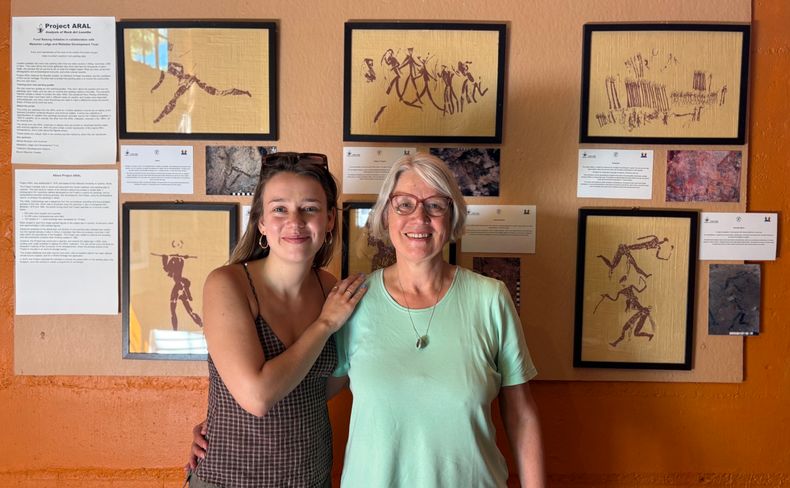
Today was a special day at Malealea Lodge. We had the privilege of meeting Monica and Jana Smits, the daughter and granddaughter of Professor Lucas Smits, whose work helped establish an extraordinary project dedicated to documenting and preserving Lesotho’s ancient rock art.
Their visit was a wonderful opportunity to reflect on the remarkable history of Project ARAL (Analysis of Rock Art Lesotho) and the dedicated people who have worked to preserve this precious cultural heritage for future generations.
At Malealea Lodge, we celebrate the rich cultural and natural heritage of our beautiful mountain kingdom. The ancient San rock paintings found in our valley offer a fascinating glimpse into the lives, beliefs and traditions of the hunter-gatherer people who inhabited these mountains long before modern times.
Project ARAL: Documenting a Priceless Heritage
Established in 1978 and based at the National University of Lesotho in Roma, Project ARAL set out to locate, record and document the rock paintings created by the San hunter-gatherers, known in Sesotho as the Baroa.
Lesotho is believed to have one of the highest concentrations of rock art sites in Africa, with more than 2,000 sites estimated to exist within the country’s borders.
Between 1979 and 1985, when the project operated on a full-time funded basis, the team located and recorded an impressive 692 rock art sites. They filed 34,262 colour transparencies and completed 150 full-scale drawings covering 19 sites.
The largest recorded site, Ha Baroana, contains approximately 2,200 painted figures. Despite the project’s extensive work, the team believed that the sites documented represented only a fraction of Lesotho’s total rock art heritage.
Their research created an invaluable record of these ancient paintings and laid the foundation for further archaeological study and conservation efforts.
Joe Alfers: Preserving the Paintings Through Photography
Photographer and photojournalist Joe Alfers played a vital role in Project ARAL, leading its field team between 1979 and 1985.
Rather than relying on the conventional method of tracing paintings directly onto transparent film at the rock face, the team developed innovative photographic techniques to record the paintings more objectively. These photographs were complemented by detailed interpretative drawings, allowing researchers to study the paintings more closely.
The project’s work continued after funding ceased in 1985. In 2003, funding enabled the ARAL collection to be digitised by the Rock Art Research Institute at the University of the Witwatersrand, where the physical archive is housed.
Digitisation has helped preserve this important cultural record, while modern image-enhancement techniques have made it possible to examine details in paintings that were previously difficult to distinguish.
In 2016, Project ARAL expanded its mandate to include the preservation of rock painting sites throughout Lesotho.
Protecting Our Heritage Through Local Communities
Preserving rock art involves more than recording the paintings. It also requires protecting the sites themselves and ensuring that the communities living nearby recognise their cultural and historical value.
Project ARAL has pioneered rock art workshops in different parts of Lesotho, helping local people develop an understanding of the paintings and their significance.
Training local guides is an important part of this work. By learning about the artists, their techniques and the cultural context of the paintings, guides can share their knowledge with visitors and earn an income through guided excursions.
This creates an economic incentive for conservation and helps local communities become active custodians of their heritage.
Discover the San Rock Art at Malealea Lodge
At Malealea Lodge, we are proud to contribute to this effort by offering visitors the opportunity to discover the rock art in our own valley which holds remarkable examples of ancient San rock paintings, providing a unique opportunity to experience this heritage in its natural setting.
Guests can join a three-hour guided hike or a pony trek to visit the rock art sites. Our local guides have attended rock art training workshops hosted by Joe Alfers and are very knowledgeable about the paintings found in the valley. They share their understanding of the artwork and its cultural significance, helping visitors appreciate these fascinating images and the people who created them. Exploring the sites with a local guide offers more than an opportunity to see ancient paintings. It is a chance to connect with Lesotho’s past while supporting local livelihoods and the preservation of an irreplaceable cultural resource.
Discover Lesotho’s Rock Art at Malealea Lodge
Take Home a Piece of Lesotho’s History
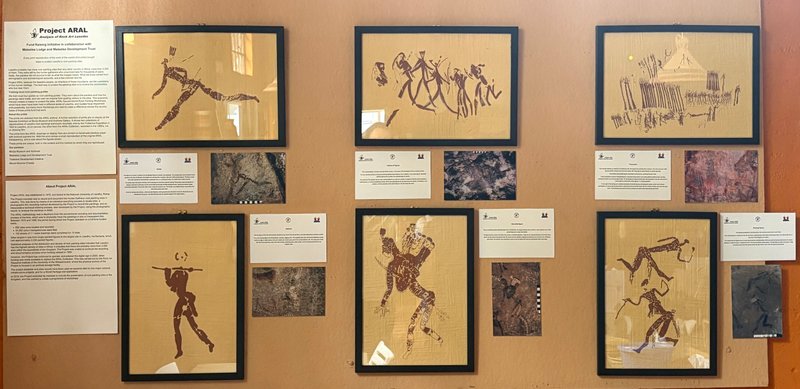
At Malealea Lodge, we also support a fundraising initiative in collaboration with Project ARAL and the Malealea Development Trust.
We have a display of six carefully produced digital reproductions of San rock paintings, lovingly created by Joe Alfers from the ARAL archive. These prints allow visitors to appreciate the extraordinary detail of the ancient artwork while contributing to the wider work of rock art preservation.
The reproductions are printed on handmade bamboo paper using archival pigment inks. Each print is accompanied by a small reproduction of the original ARAL transparency and a note explaining the figures depicted. These distinctive prints offer a rare opportunity to own a piece of Lesotho’s cultural heritage.
Every print purchased helps support the protection of Lesotho’s rock painting sites.
The initiative brings together partners who share a commitment to preserving this legacy, including Morija Museum and Archives, Malealea Lodge and the Malealea Development Trust, Tsatsane Development Initiative and Mount Moorosi Chalets.
A Legacy Worth Preserving
Meeting Monica and Jana and having Joe here earlier this week, made this history particularly meaningful. Behind the photographs, drawings, archives and research are people whose dedication has helped preserve a record of human expression across the generations.
The San paintings are far more than beautiful images on rock. They offer a precious connection to the past, revealing glimpses of the people who once inhabited these mountains and the world as they understood it.
Although many questions about the artists and the meanings of their paintings remain unanswered, their work continues to speak to us across thousands of years.
At Malealea Lodge, we believe that sharing this heritage with our guests is one small but important way of keeping its story alive.
We are honoured to support the ongoing work of Project ARAL, to celebrate Joe Alfers’s contribution to documenting these remarkable paintings, and to help ensure that Lesotho’s ancient rock art is appreciated and protected for generations to come.
Come and discover the ancient stories preserved in the rocks of Malealea — and help us protect a remarkable part of Lesotho’s cultural heritage.
Further Reading
🌍🚵♀️ MALEALEA IS ON THE WORLD MTB MAP! 🇱🇸
Wed October 14, 2026
Read This Article
🏔️🚧 A Road to a New Future: The Malealea Road Finally Gets the Attention It Deserves 🌿✨
Tue August 11, 2026
Read This Article
MALEALEA, LESOTHO — For more than a decade, the road into Malealea has been part of the adventure. For those of us who live and work here, however, it has been much more than that. It is the road that connects our communities to Maseru and Mafeteng. It is the road travelled by children going to school, families going to hospital, farmers transporting their produce, employees travelling to work — and visitors...

Malealea Lodge & the Eco Cook Bags Initiative Featured by Intrepid Travel
Tue June 30, 2026
Read This Article
We are incredibly honoured that Malealea Lodge and the Eco Cook Bags Initiative have been featured in Intrepid Travel’s Q2 Supplier and Partner Newsletter as an inspiring example of community-driven sustainability and climate action. This international recognition highlights how tourism can support meaningful environmental action, sustainable livelihoods, and improved living conditions in rural communities.
Share This Post